
Why Do Home Inspectors Use Drones Instead of Walking Every Roof?

When most people picture a home inspection, they imagine the inspector climbing a ladder and walking across the roof. It seems like the obvious way to inspect it.
In reality, that is not always possible, and in many cases, it is not the safest or even the best option.
Some roofs are simply not designed to be walked. Others may be too steep, too high, wet from recent rain, or covered with materials that become slippery. Certain roofing materials, such as slate or clay tile, can even crack under normal foot traffic.
Fortunately, advances in technology have given inspectors another way to safely examine these areas. One of the most useful tools is a drone.
Why Use a Drone Instead of Walking the Roof?
Think of a drone as a camera that can safely fly anywhere around the home.
Instead of relying only on what can be seen from a ladder or from the ground, an inspector can capture detailed photographs from multiple angles, zoom in on areas of concern, and document conditions that may otherwise be difficult to see.
The goal is not to replace the inspection. The goal is to gather as much information as possible while keeping people safe and avoiding unnecessary damage to the roof.
In many situations, a drone actually provides a better overall view of the roofing system because it allows the inspector to see the roof from perspectives that simply are not possible while standing on it.
Why Is the Chimney Such an Important Area?
If your home has a chimney, one of the most vulnerable areas for leaks is where the chimney passes through the roof.
Imagine cutting a hole in an umbrella. Unless that opening is carefully sealed, water will eventually find its way through.
The same principle applies to your roof.
To prevent water from entering, builders install a material called flashing around the base of the chimney. Flashing is made of thin pieces of metal that overlap the roofing materials and direct rainwater away from the opening.
Over time, flashing can loosen, rust, separate, or become damaged.
Even a very small gap can allow water to enter the home.
Because the leak often begins inside the roof structure, homeowners may not notice anything is wrong until they see stains on a ceiling, peeling paint, damaged drywall, or mold growth. By that point, water may have been entering the home for months.
Using a drone, inspectors can closely examine the chimney, flashing, chimney cap, masonry, and surrounding roofing materials for visible signs of deterioration.
Roof Valleys Carry More Water Than You Might Think
Another area that deserves special attention is the roof valley.
A roof valley is the place where two sections of the roof meet, creating a natural channel that directs rainwater toward the gutters.
During a heavy rainstorm, hundreds of gallons of water may travel through these valleys.
Because they handle so much water, roof valleys tend to wear faster than many other parts of the roof.
Inspectors look for damaged shingles, deteriorated materials, debris accumulation, and other conditions that could prevent water from flowing properly.
Small Openings Can Lead to Big Problems
One of the biggest misconceptions about roofs is that a leak has to be large before it becomes a problem.
In reality, water only needs a tiny opening.
Once it gets beneath the roofing materials, it can travel surprising distances before becoming visible inside the home.
Over time, that moisture can damage insulation, stain ceilings, weaken wood framing, rot roof decking, and create conditions where mold may develop.
What begins as a relatively inexpensive repair can eventually become a major restoration project if left unnoticed.
What Else Can a Drone Help Identify?
While chimneys receive a great deal of attention, they are only one part of the roof.
Drone inspections can also help identify:
Missing or damaged shingles after storms
Loose or deteriorated ridge caps along the peak of the roof
Damaged flashing around skylights and plumbing vents
Tree branches rubbing against the roof
Gutters clogged with leaves or debris
Areas where water may not be draining properly
Sagging sections that could indicate structural concerns
Each observation helps create a more complete picture of the roof’s overall condition.
Can a Drone See Everything?
No.
A drone is an excellent inspection tool, but it cannot see through roofing materials or inside the home.
For example, it cannot determine whether water has already entered the attic, whether insulation has become wet, or whether wood framing has been damaged.
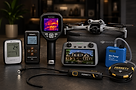
That is why a home inspection uses many different tools and techniques together. Visual observations, moisture testing, thermal imaging when appropriate, attic inspections, and experience all work together to evaluate the home’s condition.
No single tool tells the entire story.
Why This Matters
Most homeowners rarely have the opportunity to see their roof from up close.
As a result, many roofing problems develop quietly over time until water finally appears inside the home.
By allowing inspectors to safely examine difficult to reach areas in remarkable detail, drones make it easier to identify developing issues before they become costly repairs.
The technology itself is not what matters most.
What matters is helping homeowners better understand the condition of one of the most important systems protecting their home, so they can make informed decisions about maintenance, repairs, and protecting their investment for years to come.


Comments